Detroit
Pathways to
Connection
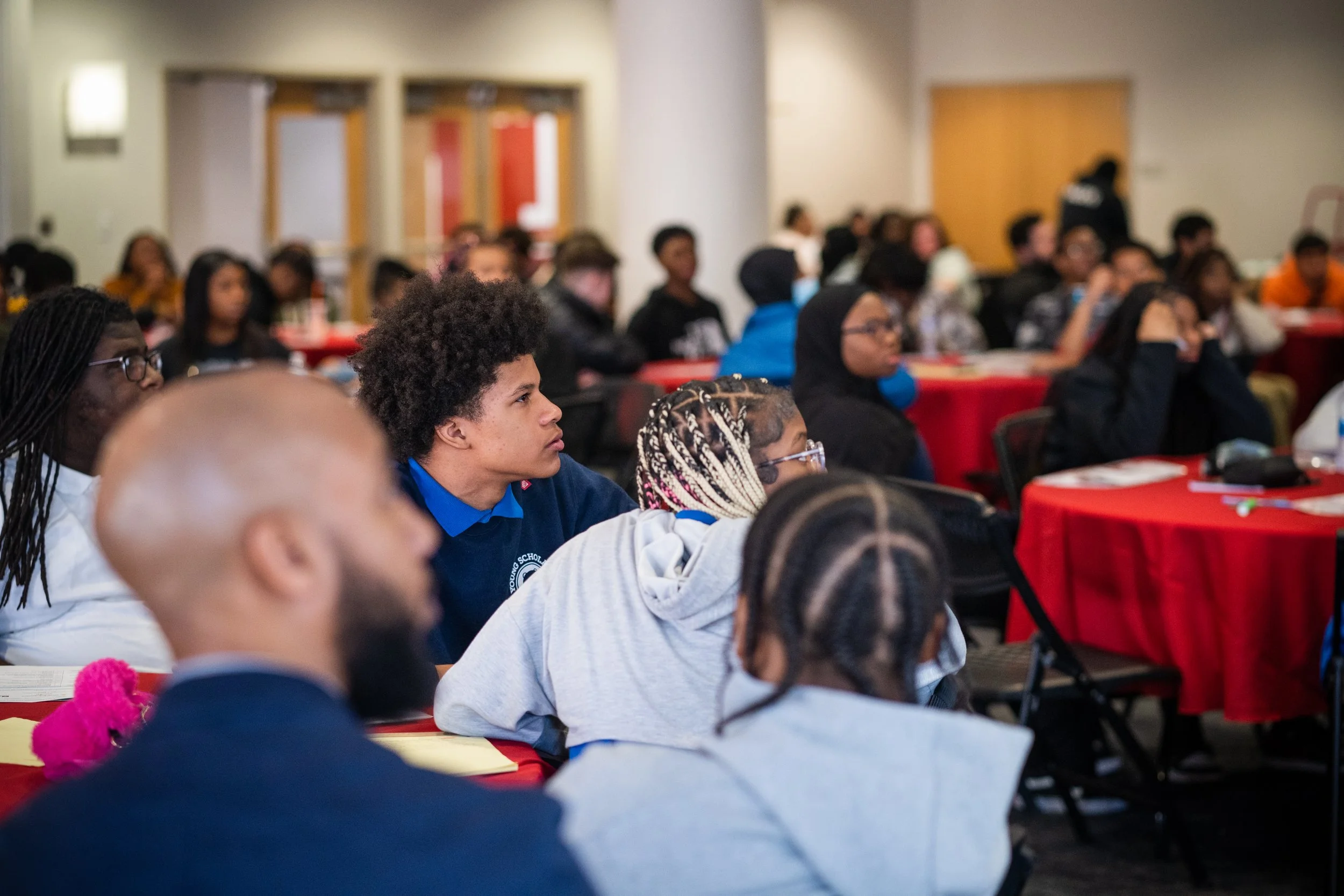
Pathways to Connection aims to improve conditions that cause young people in Detroit to become disconnected, and identify what can help them reconnect.
Connection is shaped across systems.
Youth disconnection and workforce gaps are commonly defined by whether a
young person is enrolled in school or employed, and while those measures
are important, they tell us very little about how someone arrived there.
Detroit's young people often do not experience systems one at a time.
Pathways to Connection looks at how these systems meet in real life
and how those interactions can strengthen connection or make it harder
to sustain.

The question is not simply whether a young person is connected. It is what around them helps connection hold.
Strengthen programs, partnerships, investments, policies,
and pathways for more young people to have
meaningful opportunities to (re)connect to education, employment,
community, and the futures they envision.
Employer and economy driven. People and community focused.
More than 1 in 6 older teens in Michigan’s 13th Congressional District were neither working nor in school in 2024, the highest in the nation.
Michigan’s 13th includes portions of Detroit and nearby communities. In comparison, nationally, 7% of young people ages 16–19 were neither working nor in school that year.
More than 1 in 3 young adults experienced at least one period of disconnection after high school.
RAND Corporation · 2026 · Ages 18–22
Young adults ages 20–24 are disconnected from work and education nationally.
Annie E. Casey Foundation / KIDS COUNT
In societal costs can be associated with one young person’s disconnection throughout their youth.
RAND Corporation · 2025
Extending the age range beyond 16-24 substantially increases the number of young people impacted by disconnetion. Our work includes ages 14–29 to capture young people's experience before, during, and after the traditional transition to adulthood.
Skilled trades openings are projected each year through 2035.
Alliance for America’s Skilled Trades · 2026
The workforce needs people, and young people need more visible, accessible, and navigable pathways into opportunities.
Sources and definitions
Youth disconnection. Definitions vary by source. Generally, disconnected or opportunity youth are young people who are not participating in employment or education. Some measures also include trainings.
Age ranges. National measures commonly focus on ages 16–19, 16–24, or 18–24. Pathways to Connection studies ages 14–29 to fill a gap in understanding the experiences of young adults ages 25–29, many of whom are still navigating the transition into adulthood, career formation, family responsibilities, independent housing, and long-term economic stability.
Michigan's 13th. MI-13 includes portions of Detroit’s east and west sides and extends across communities from Grosse Pointe Shores to Wyandotte and Downriver communities. City of Detroit communities include Barton-McFarland, Michigan-Martin, Midtown, Oakman Blvd, University District, Sherwood Forest, Osborn, Denby, Chalmers, Midtown, Indian Village, and East English Village among others. 24% of the District's population is 17 years of age or younger.
Sources. Annie E. Casey Foundation / KIDS COUNT; RAND Corporation; The Federal Reserve Bank of St. Louis; the Alliance for America’s Skilled Trades; and the Congressionnal District Health Dashboard.
What shapes young peoples’ path into, through, and out of disconnection?
Rather than focusing on disconnection by itself, we're considering the lived experiences and realities across Detroit's young people, as well as the community landscape and ecosystems, to better understand what protects connection, what disrupts it, and what communities can learn from both.
Meet the teamThe faces connecting the work.
Research and Project Team
Research and Project Team
Community Advisory Team
Community Advisory Team
Partnership Team
Partnership Team
See what we learn and the impact you can make.
Project updates, youth and workforce development insights, reports, participation information, and public-facing resources will live here as we learn and implement.
Get project updates and related insights by email.